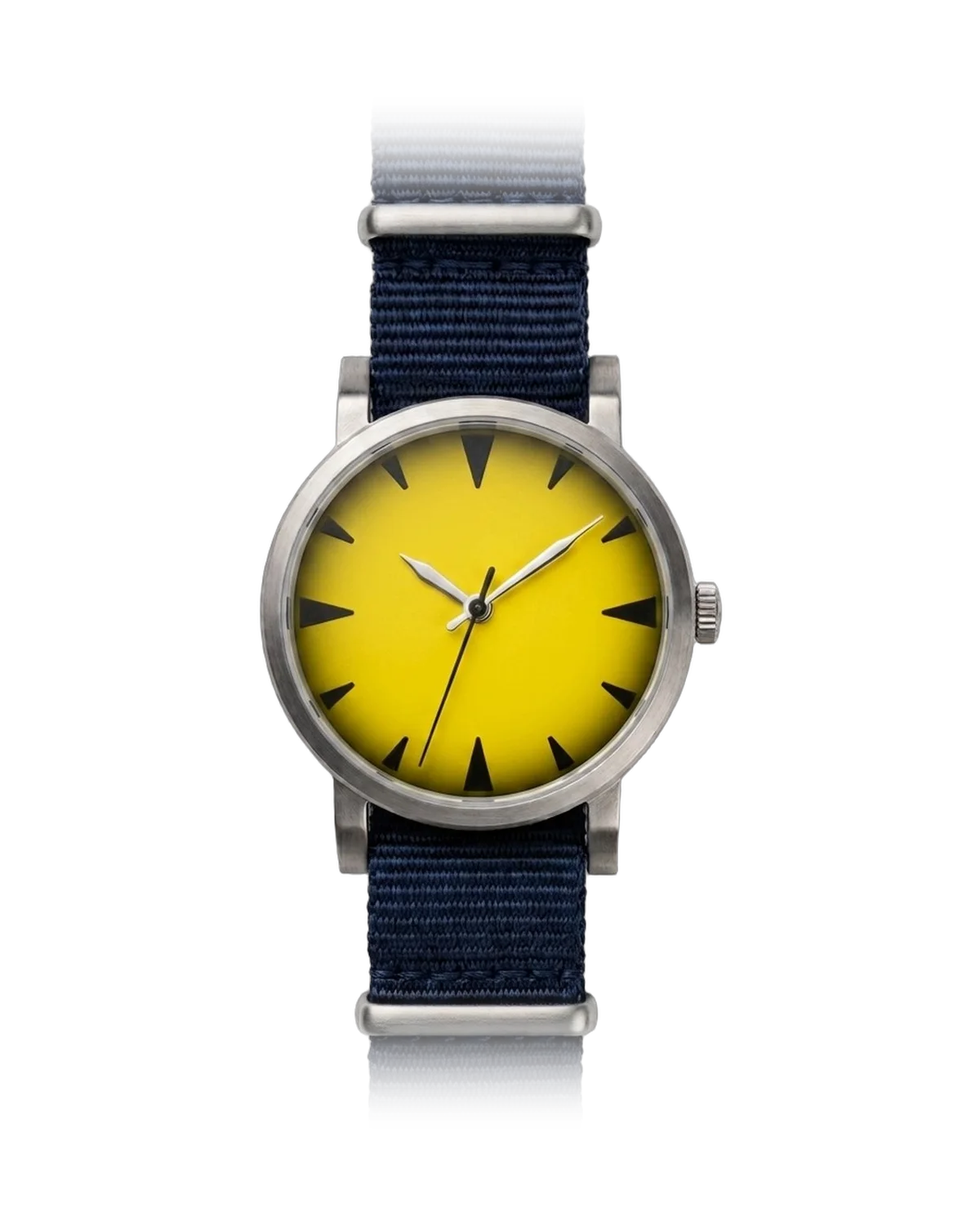
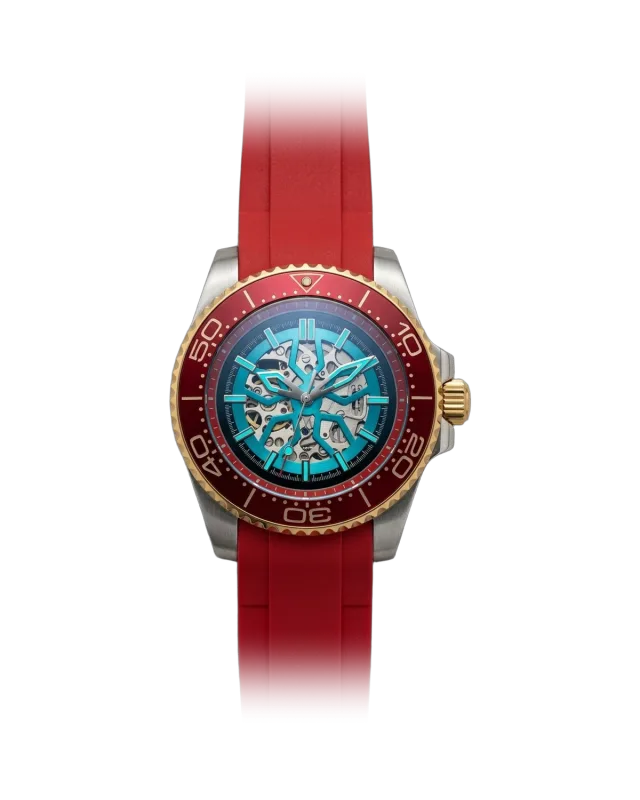
Great watches have always been built this way: the finest part for every job, found
wherever in the world it is made best, then brought together by people who care how
it all fits. Here is our flagship, taken apart.
01 · Crystal
Sapphire crystal
Mohs 9 · Second only to diamond
Synthetic sapphire sits at nine on the Mohs scale of hardness. Only diamond is harder,
so keys, coins and years of daily wear leave it untouched. It is the crystal Rolex moved
the Submariner to at the end of the 1970s, and it has marked out a serious watch ever since.
Also found on Rolex Submariner · Omega Seamaster
02 · Bezel
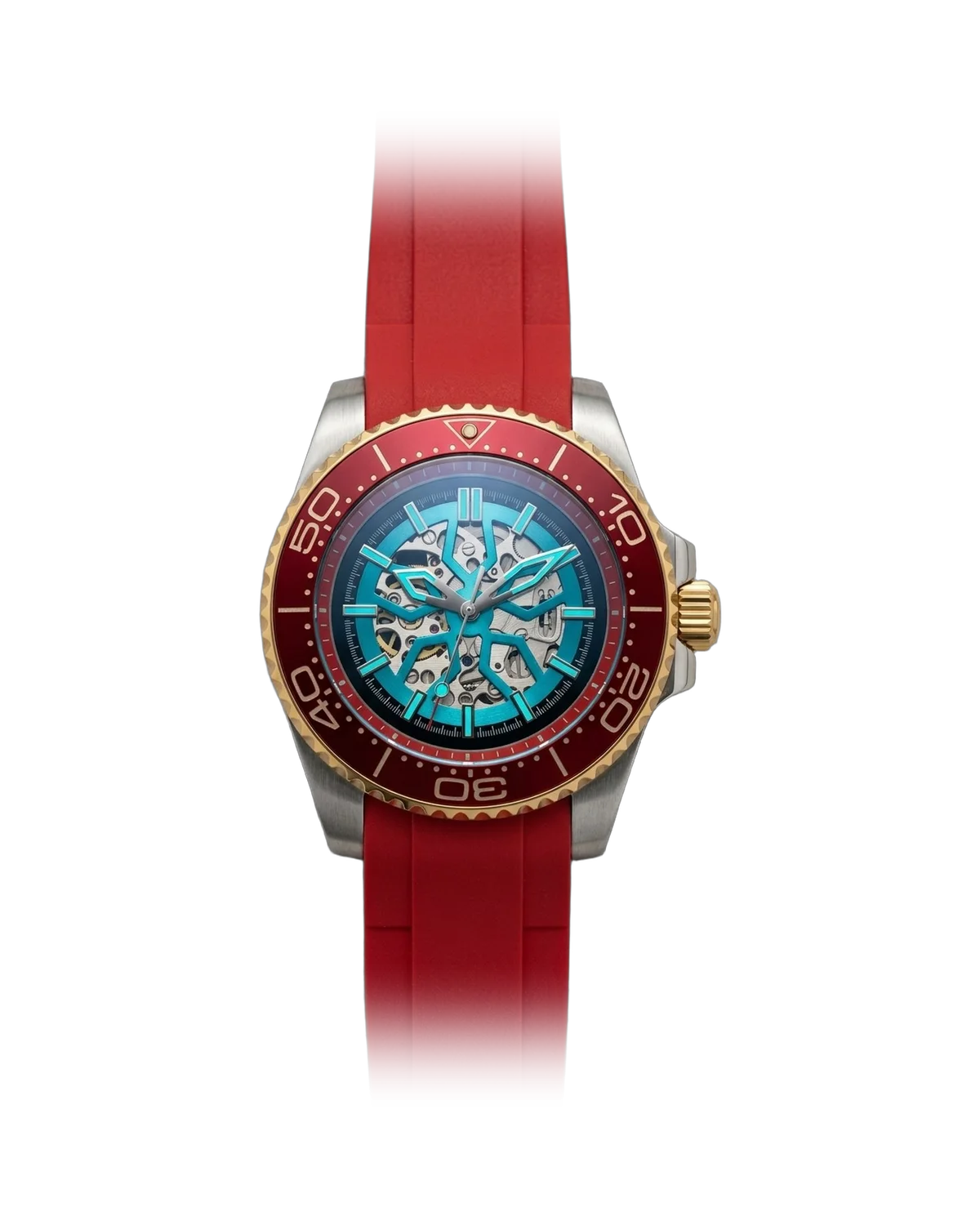
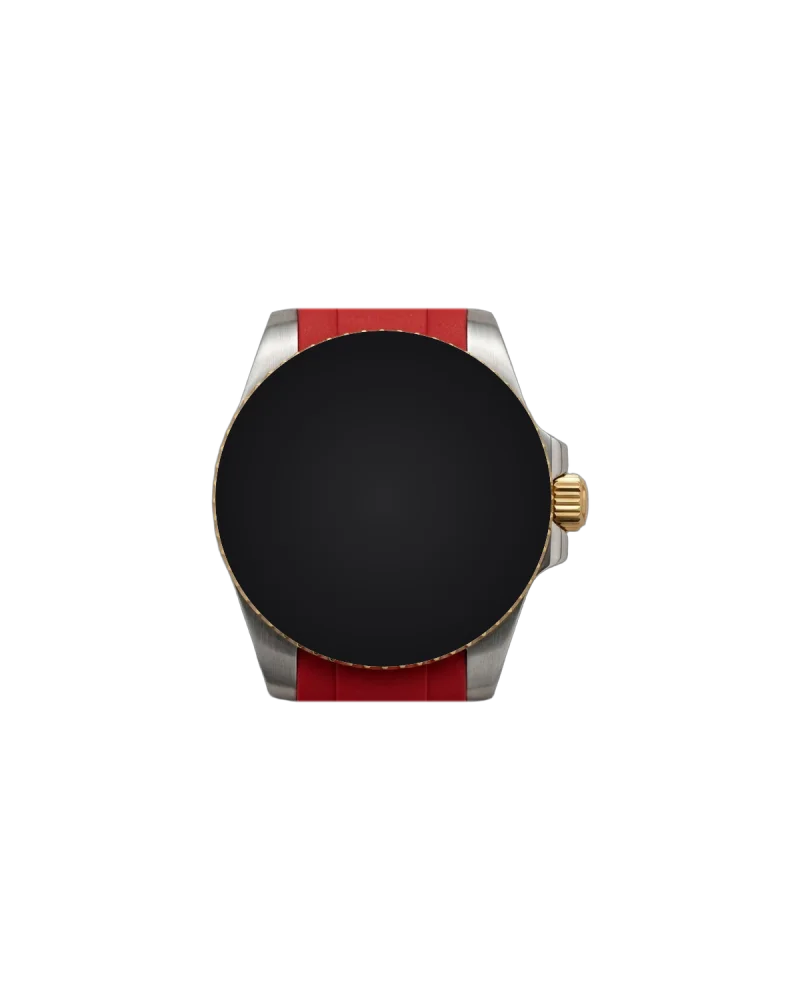
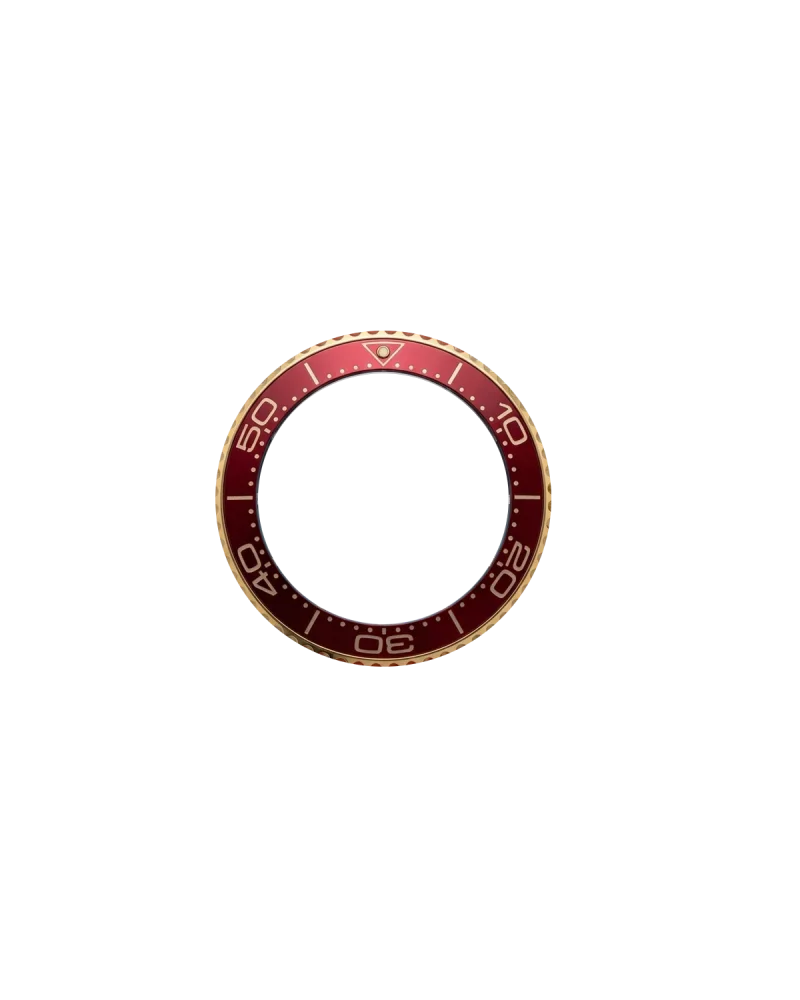
Red ceramic bezel
Ceramic insert · Gold-tone coin edge
Ceramic is fired, not painted, so the colour runs all the way through: sun won’t fade
it and the sea won’t scratch it. Rolex made ceramic bezels famous with Cerachrom in
2005, and red is the hardest colour of all to fire. It took Rolex until 2014 to put red
ceramic on the GMT-Master II. Ours sits in a coin-edged, gold-tone surround, for grip and
a flash of warmth.
Also found on Rolex GMT-Master II · Omega Seamaster Diver 300M
03 · Dial & hands
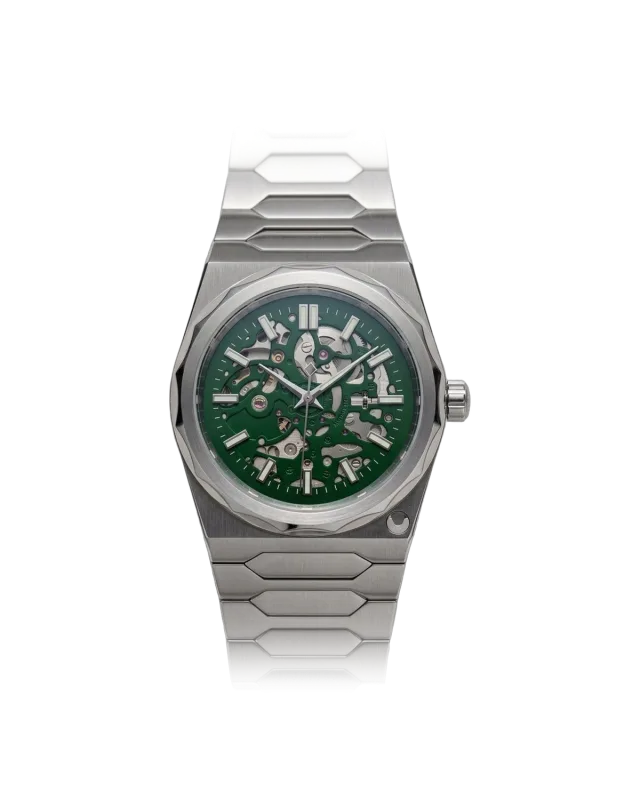
Open-worked steel dial
Skeletonised · Ice blue · Marine-grade stainless steel
Most dials hide the machine. This one is cut back to a web of ice-blue steel, so the
movement shows from edge to edge. It is the same idea behind Audemars Piguet’s Royal Oak
Openworked and Hublot’s Big Bang Unico. The hands are skeletonised to match, so nothing
solid stands between you and the mechanism.
Also found on Audemars Piguet Royal Oak Openworked · Hublot Big Bang Unico
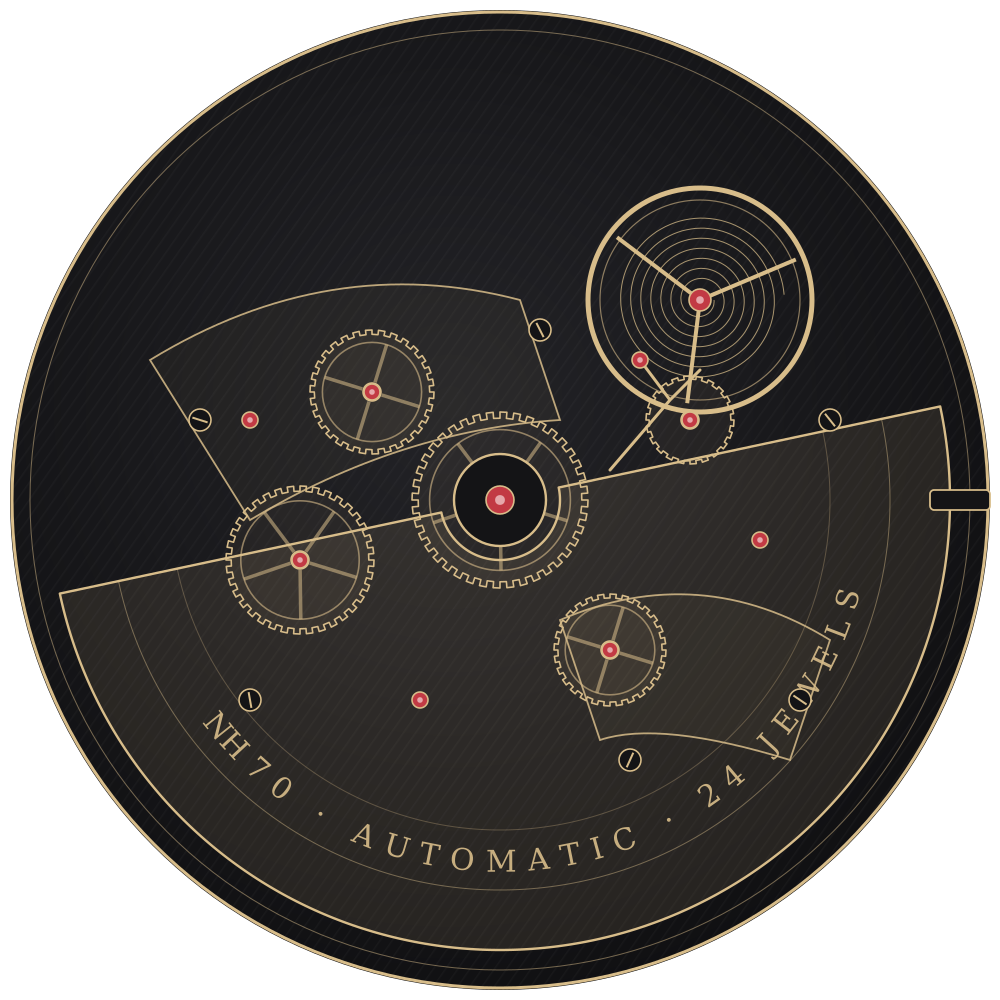
The heart is Japanese: the NH70, built by Seiko’s own movement maker. It is the skeletonised
member of the NH family, with its bridges and plates cut away so you can watch it work through
the open dial. It winds itself as you move, stops
the seconds hand so you can set it exactly, and runs for around 41 hours off the wrist. The
part that makes it tick, the lever escapement, is an English invention. Thomas Mudge
devised it in London around 1755.
Made by Seiko Instruments, Japan
05 · Case
Marine-grade steel case
Brushed flanks · Knurled gold-tone crown
Steel became a luxury material in 1972, when Gérald Genta’s Royal Oak launched in stainless
steel at the price of a gold watch. Ours is marine-grade stainless steel, chosen because it
shrugs off salt water, sweat and knocks. The flanks are brushed, and the crown is knurled
and gold-toned to answer the bezel.
Also found on Audemars Piguet Royal Oak · Patek Philippe Nautilus
06 · Strap
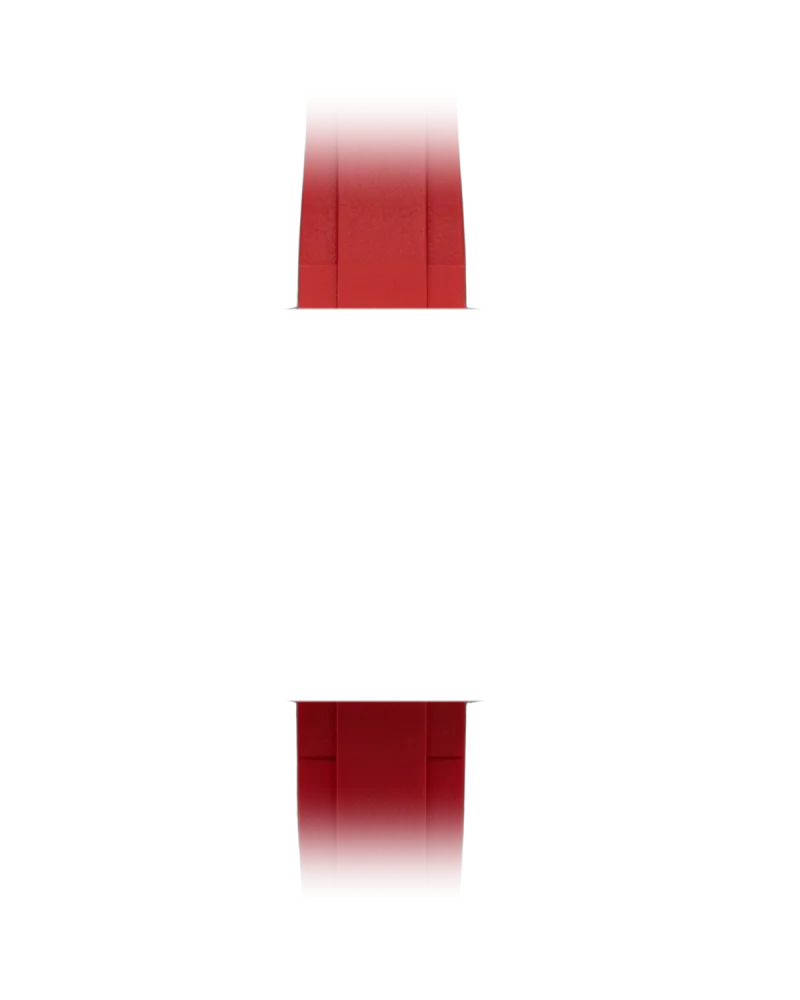
FKM rubber strap
Fluoroelastomer · Ribbed profile
FKM is the rubber that aerospace and motorsport trust for seals that must not fail. It is
dense and supple, and it stands up to sweat, salt water and sun cream without turning
sticky, collecting dust or fading. Rubber first met fine watchmaking in 1980, when Hublot
put a gold watch on a rubber strap and changed the rules. Today FKM is the benchmark for a
premium rubber strap.
A tradition begun by Hublot, 1980
Assembled in England
Six parts. One bench.
Every part is chosen for its pedigree, wherever in the world it is made best. The watch
itself comes together in England.
Choose the case, the metal, the movement, the dial and the strap, or set a photograph that
means something as the dial itself. We will estimate it for you and perfect it together at a
private consultation.
For much of the eighteenth century, London was the capital of the watchmaking world.
Ideas born in its workshops still run inside almost every mechanical watch made today,
ours included.
Slaidburn watches are assembled in England. We think that tradition is worth carrying on.
Thomas Tompion
The father of English clockmaking. His Fleet Street workshop helped make London the centre of the trade.
Thomas Mudge
Invents the lever escapement in London. Refined over two and a half centuries, it still beats inside nearly every mechanical watch, the NH70 included.
John Harrison
His H4 sea watch keeps time across the Atlantic, solving the problem of longitude and changing navigation for good.
George Daniels
Invents the co-axial escapement, the most important new escapement in 250 years, later adopted by Omega.
Slaidburn
The best of the world’s watchmaking, brought together and assembled in England.
In Focus · 06
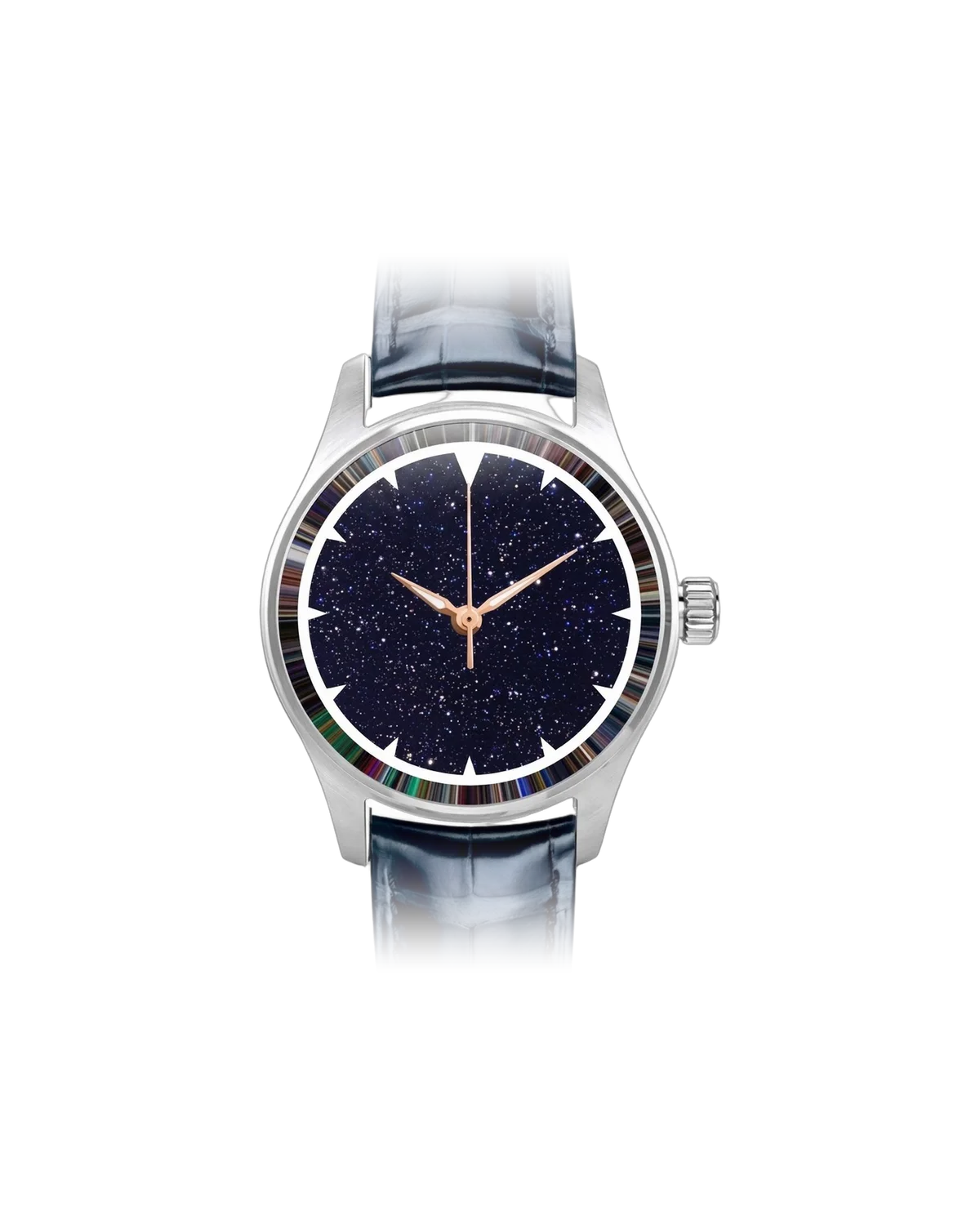
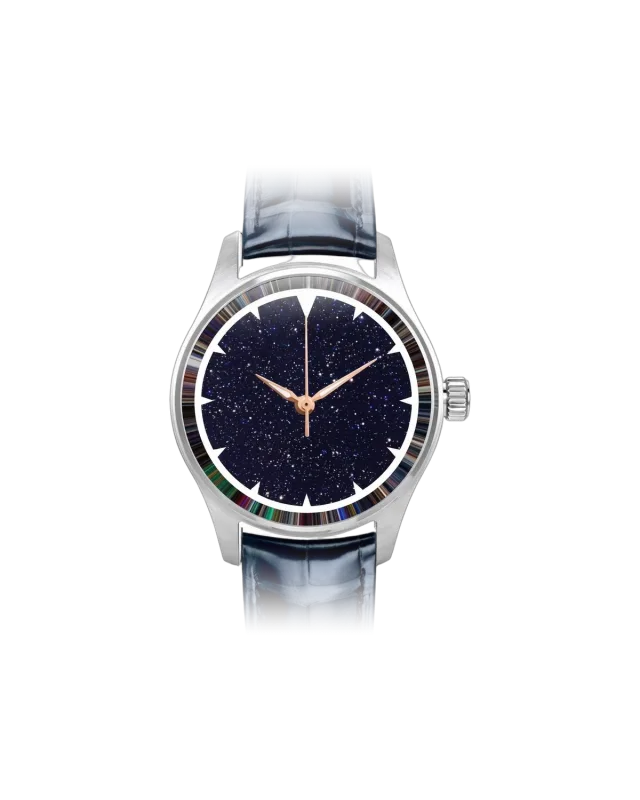
Event Horizon
A true starfield dial — deep indigo shot through with natural inclusions, so the light
on your wrist never lands twice in the same place. Around it, a chapter ring that breaks
white light into colour as it turns.